The product
One place for the parts of family life that belong together.
People, plans, responsibilities and conversation stay connected to the context they belong to: the week knows who's in it, each plan carries its driving, bringing and approvals, and what you keep stays credited to the afternoon it came from.
The shape of it
Four layers, in the order you meet them.
CircleNest isn't a bundle of family utilities. It reads outward from your own home — each layer exists because the one before it made it useful.
- Your household. Know the week and coordinate inside the house — jobs, lists, who's doing the run. A household can hold more than two adults, each seeing what concerns them, and it works on day one with nobody else involved.
- Your people. The families you rely on, grouped into circles — plus guests you invite to one specific thing without asking them to join anything.
- Your plans. An open window reaches the right households, they can answer without an account, the plan settles — with who's driving, who's bringing what and what a parent still has to approve attached to it — and the conversation about it lives with it.
- What remains. Photos from the afternoon, the ones you keep, your family timeline, and letters written now that open on a date you choose.
Underneath all four: different people in a family — and a guest who isn't family at all — do not get the same access.
Most free afternoons don't slip by because nobody wanted them.
They slip by because finding out who else was free took longer than the afternoon lasted.
Have some room? Let people you trust know. Wondering who's around? Ask — asking never reveals your own free time. Either way it only reaches the households you chose, CircleNest doesn't notify them (they see it when they look), answers are optional, and nothing about it becomes a post.
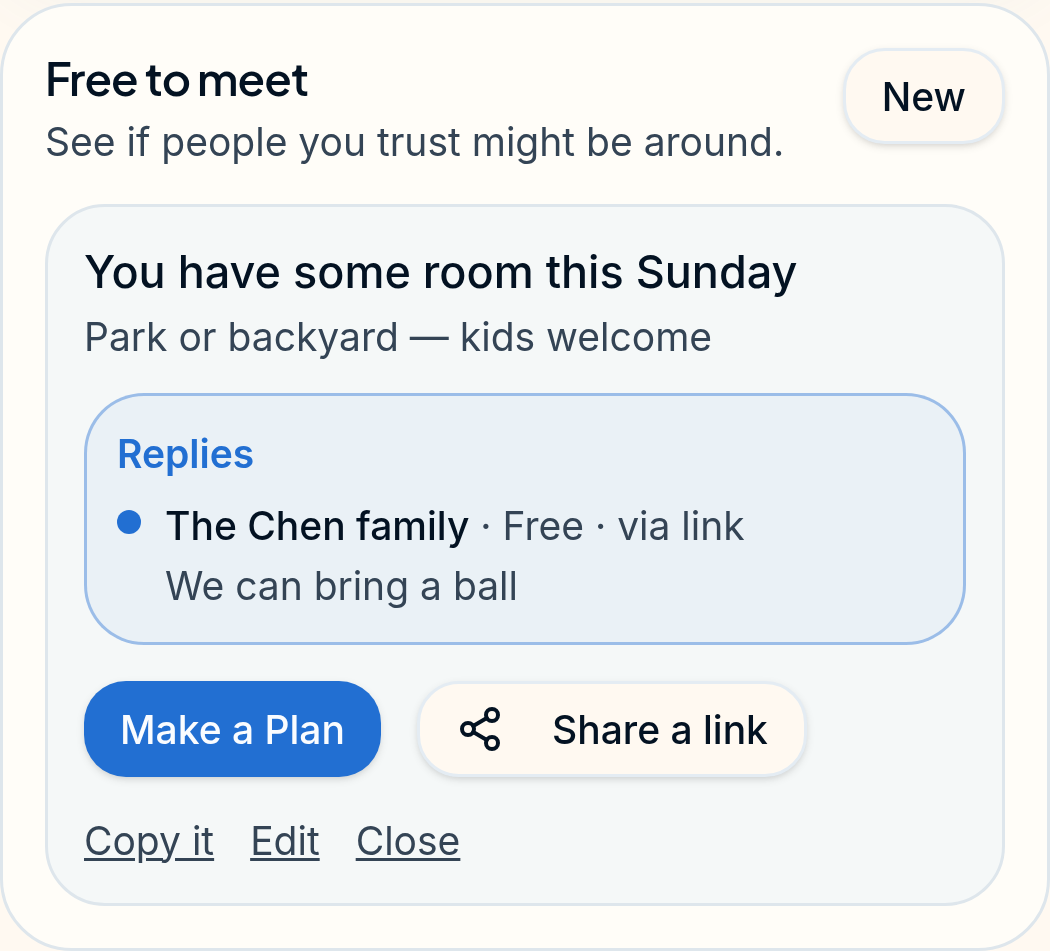
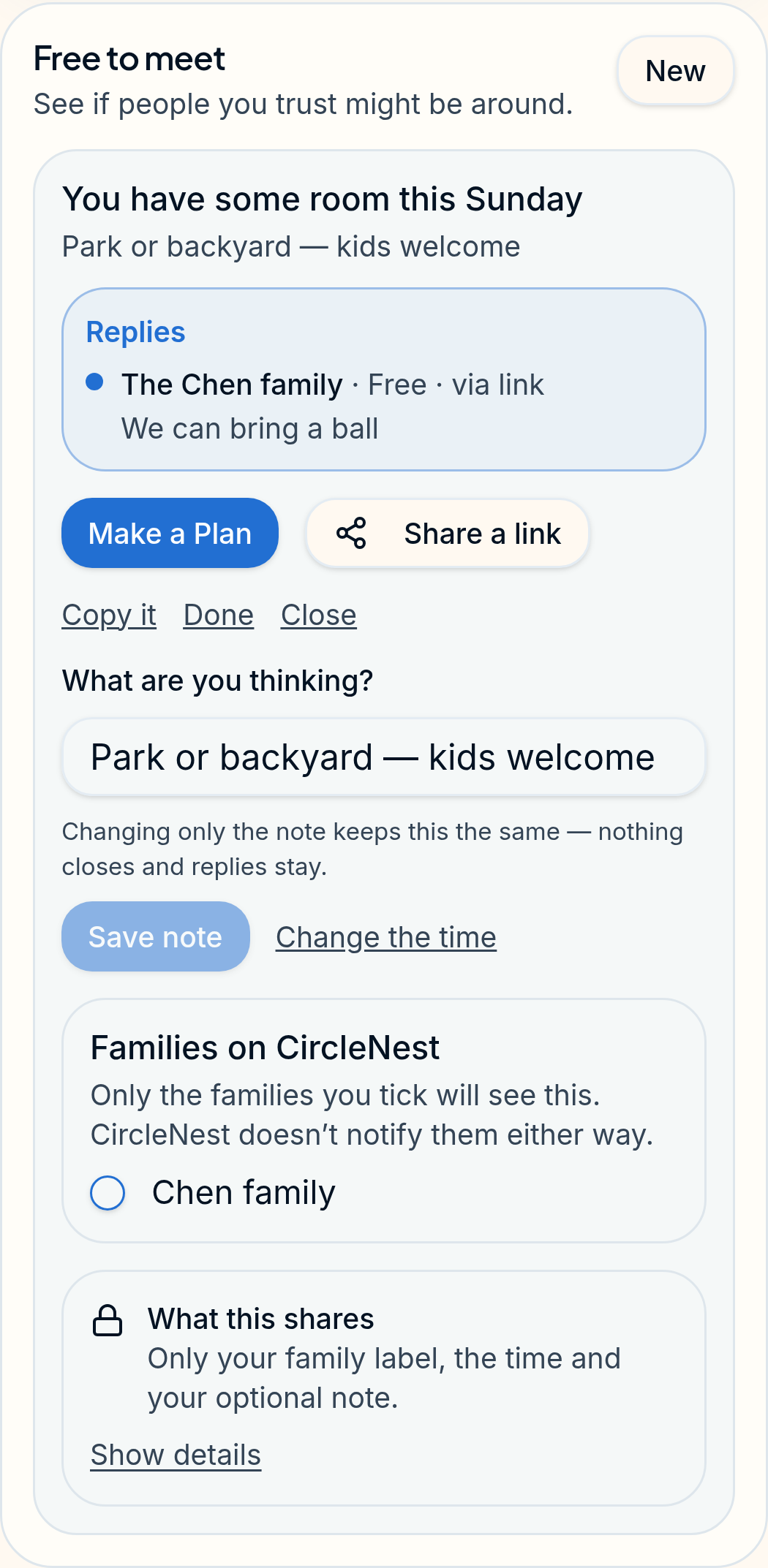
Every image on this page is the real product, not an illustration.
Anything you do already knows who it involves.
Circles are relationships, not audiences.
A circle holds households — the school-run families, the cousins, the people around one activity. Both sides agreed to be there: invited then accepted, with no discovery, no suggested contacts and no local directory. What one circle can see doesn't travel to another, guests only ever see the one thing they were sent, and children can take part in a circle without being able to change who's in it.
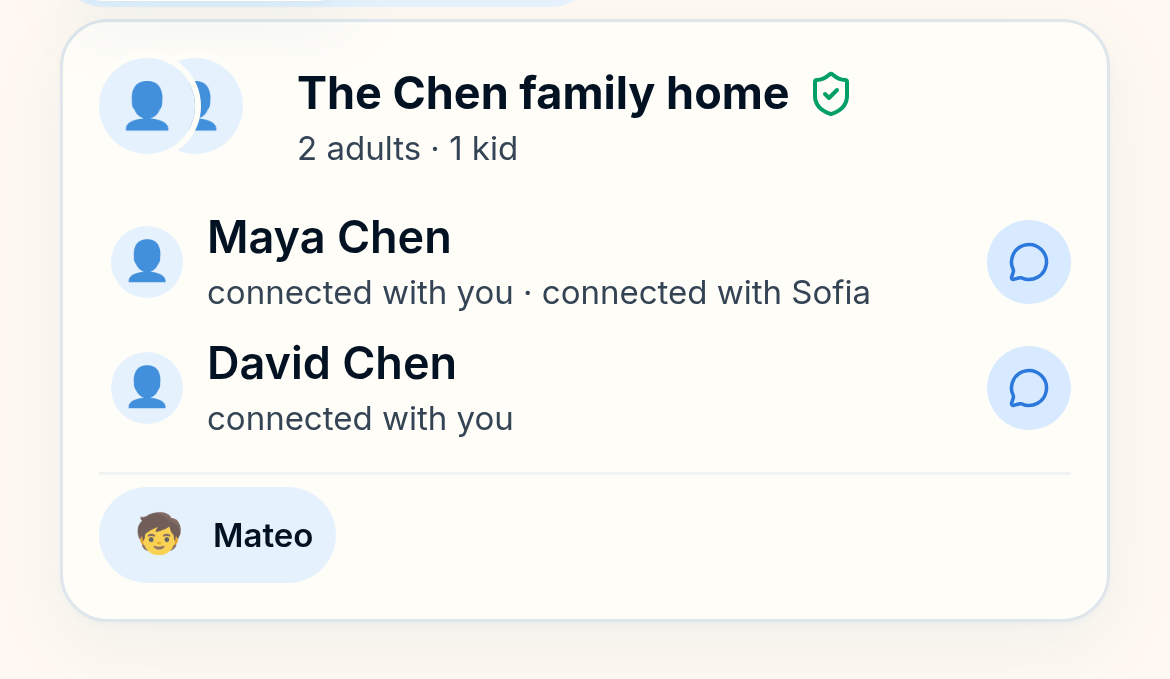
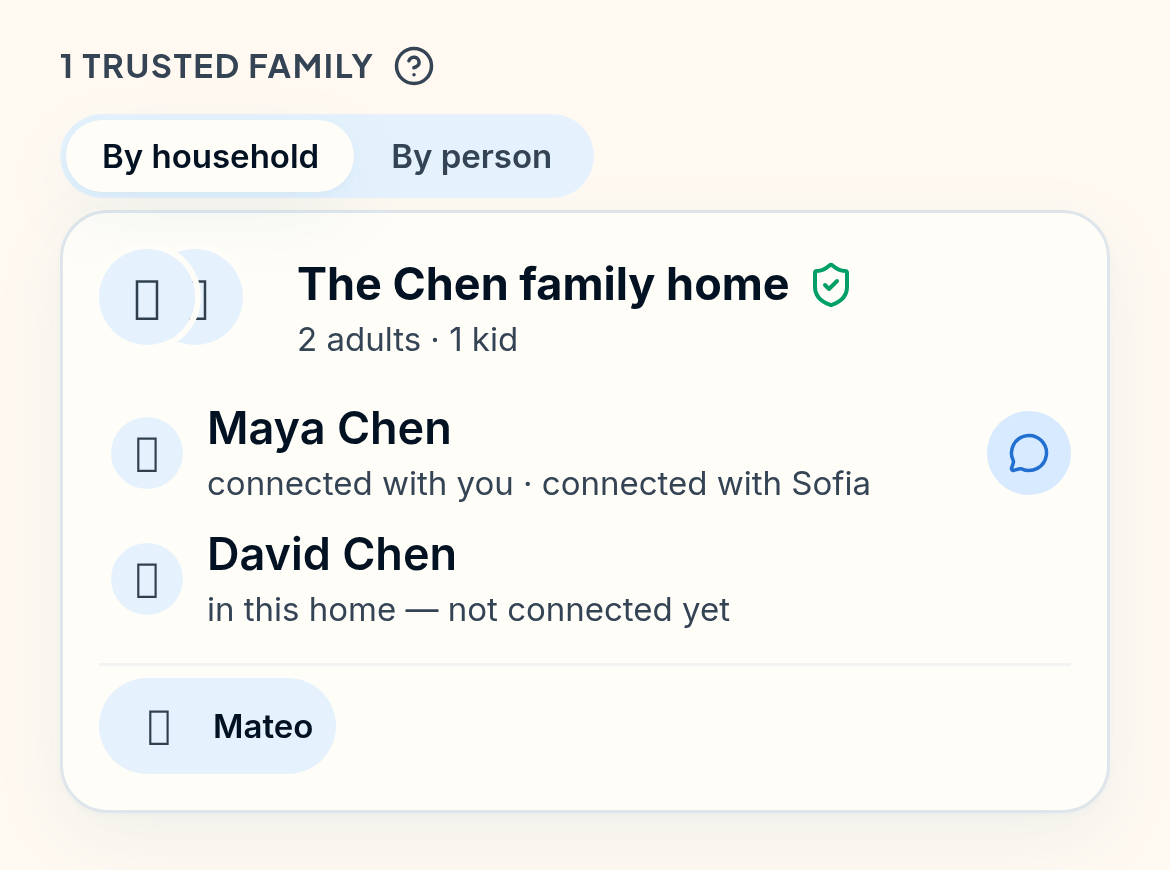
Around the plan
Saturday, soccer at ten. Most of the work isn't the invitation.
Everyone already knows it's happening. What's actually unsettled is who drives, who brings the fruit, who promised the table, and the thing one of the kids still wants to ask. Normally that lives in four threads and one parent's head. Here it lives with the plan, and by Saturday morning the day just works.
- Rides and who's driving. Offered and claimed on the plan itself, visible to the parents it affects. This is not a rideshare and never involves strangers.
- Jobs and lists at home. The shop run, the chores, what the week actually holds, which adult already promised Saturday away. Most of this never leaves your household, and it is not a project-management tool.
- Bringing and helping. The two slots left, the thing someone needs to carry, the small volunteering a Saturday depends on — attached to the plan rather than negotiated in a thread.
- Asking and approving. Someone asks, the responsible adult answers, and the answer is recorded where the plan lives. Approval always belongs to a child's own parents or guardians.
Plans and memory
Nobody planned for it to be a good afternoon.
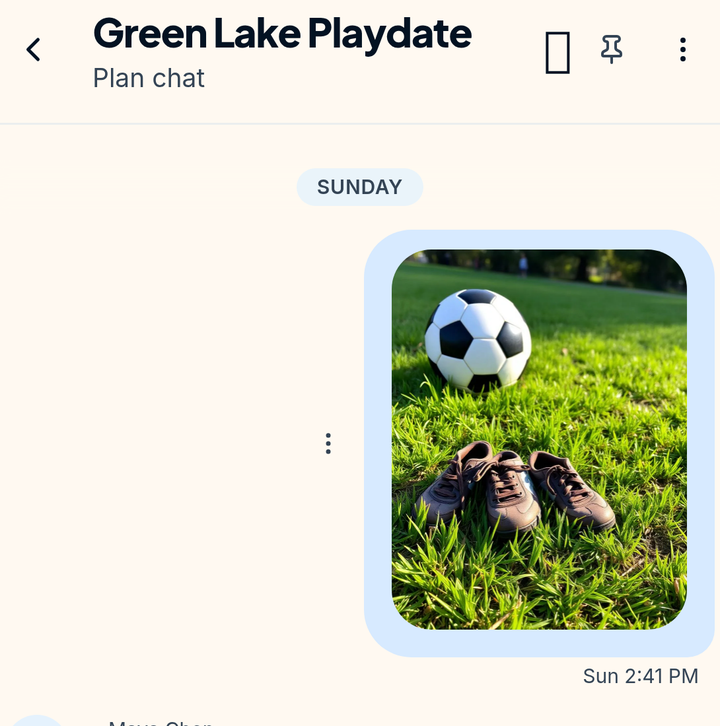
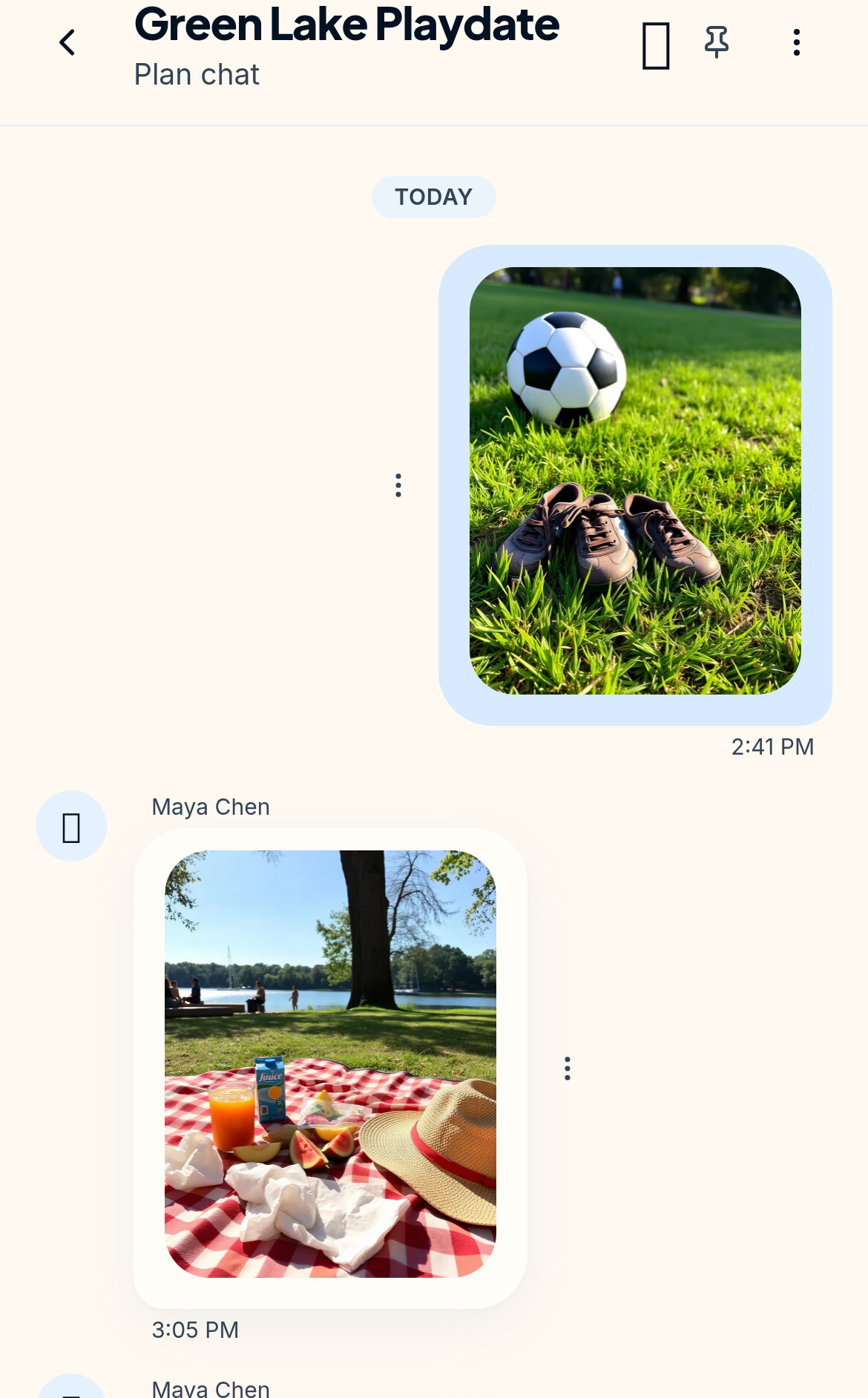
The afternoon doesn't have to end across five different camera rolls. The people who were there can add their photos to the plan, so they stay connected to the moment they came from.
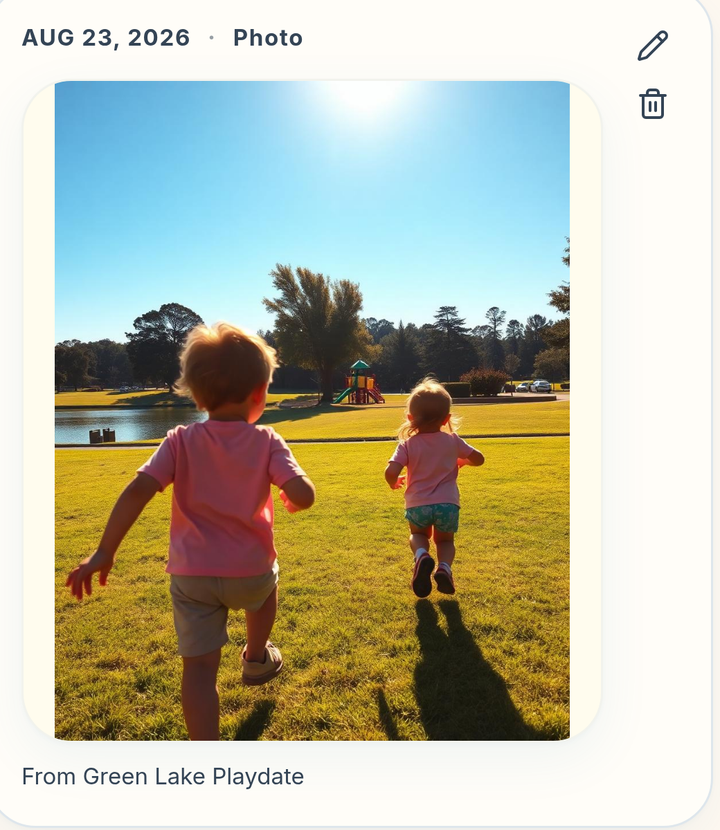
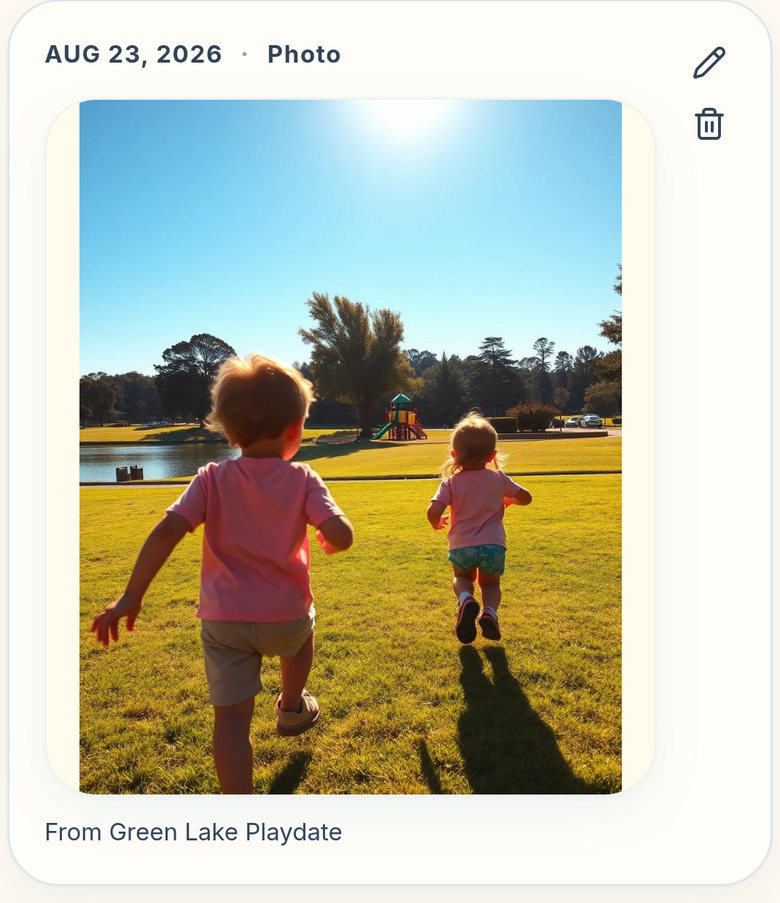
Later, someone decides one is worth keeping. It leaves the chat for your family timeline: dated, credited to the afternoon, kept by your household alone, and yours to export or delete.
Calendar context
Bring the calendars you already rely on.
See school, work and activity schedules alongside CircleNest Plans, instead of piecing the week together across apps. Imported calendars stay connected to their source; CircleNest doesn't turn them into Plans.
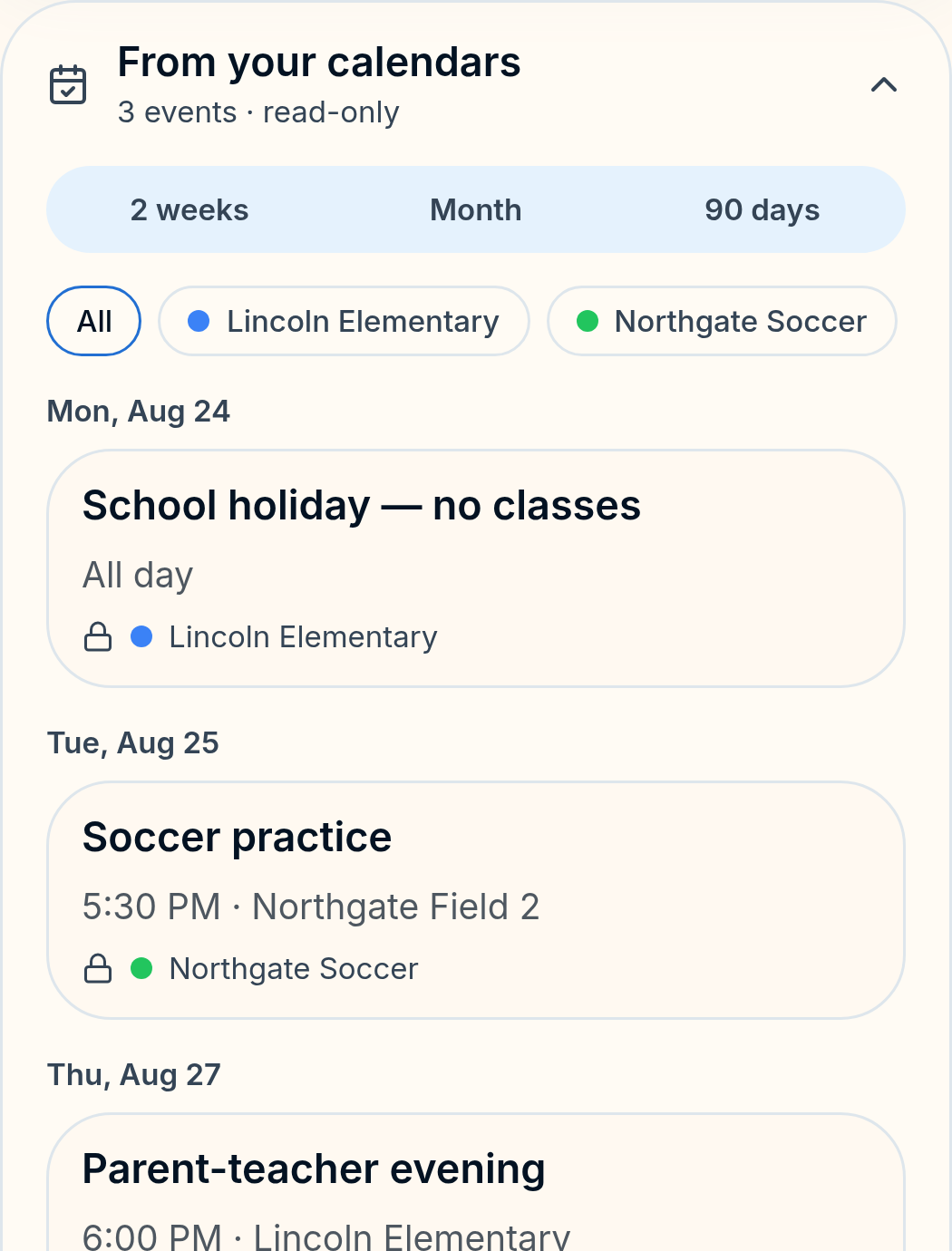
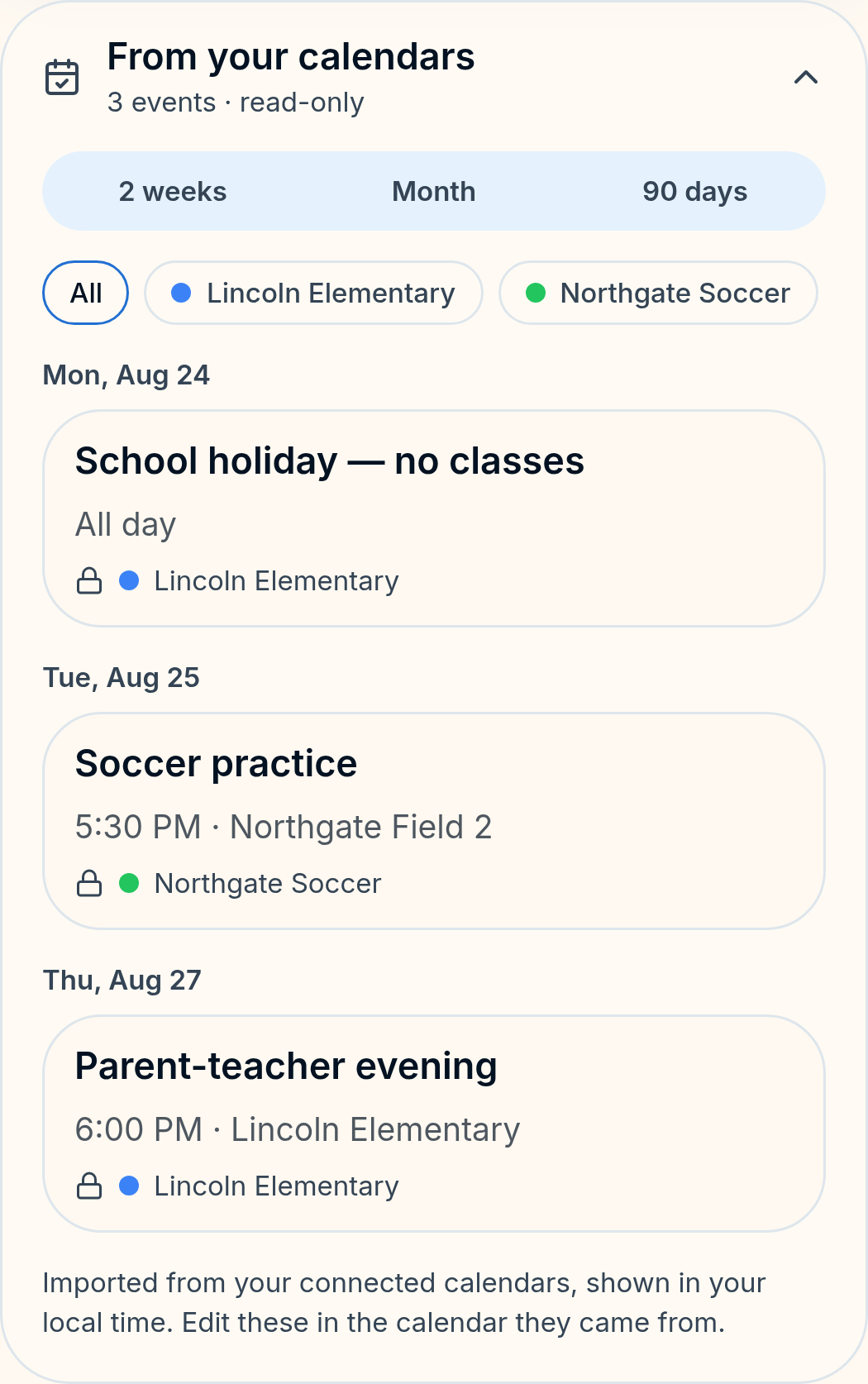
Imported school and activity calendars.
Conversation
Structure the coordination. Protect the conversation.
CircleNest reduces coordination noise — not human connection. Keep the logistics with the plan, so conversation doesn't have to carry them.
- Your household. The everyday back-and-forth between the adults at home, where something important can be said once instead of repeated.
- A circle. The families around one part of life, talking as that group — not a chat that grew to include half the school.
- A plan. Every plan owns its conversation, so questions about Sunday — and the photos from it — stay attached to Sunday.
- One person. Directly, with the same boundaries applied — a child's conversations stay inside what their own parents allow.
Share and invite
Two verbs, two different capabilities.
Share and Invite are not delivery options. They decide what the other person can see and do, and the boundary holds wherever the message ends up.
- Sharing informs. The recipient gets a read-only summary of what's happening: what, when, and roughly where, at the level of detail you chose. They cannot answer, cannot be counted, take no responsibility, and are not added to the plan's conversation or its photos.
- Inviting participates. The recipient gets a scoped seat in exactly one plan: they can answer, take a bringing slot, be part of the count, and talk in that plan's conversation — no account required. That seat never widens to your circles, your household, other plans or anyone else's details.
- Delivery is just transport. Link, message or email changes nothing about capability. A shared link stays informational even if it is forwarded; an invite link carries only the one seat it was issued for, and it can be closed.
Not pictured
Two more things no screenshot explains well.
- Check-ins and arrivals. "Here", "leaving", "picked up" — said once, to the adults who need it. Arrival matching happens on the child's own device, off until a parent turns it on, with no location trail kept.
- Letters to the future. Something written today that opens on a date you choose, years out if you like. The slowest feature in the product, and the one families ask about most.
The point was never the plan. It was the afternoon it made possible.
Everyone knew who was driving. Nobody had to ask twice.
Everything above is the shipped product, captured from a real household. Everything below states, per person, what is available today — and what deliberately isn't.
Kids
Children take part in family life, at their size.
A child's own week, plans they can ask for, jobs that are theirs, art they made, a check-in when they arrive, memories they keep, and messages with people a parent approved. That is the story: real participation, sized to the child.
Parents hold the boundaries, and what a child can do widens as they grow — by a parent's decision rather than a birthday.
Guests
Coordinate with people who aren't on CircleNest yet.
Send a private invite link. They can reply, change their answer later, add a short note, and see the current details — without creating an account. No account is required to reply.
The link stays useful when plans change. Guests see the latest time, place and note when they reopen it. Guests aren't notified automatically, so if you want to be sure they notice a change, share the same invitation again through the app you already use.
Invite links are scoped to the invitation. They don't open the rest of your CircleNest account or your family information. Someone who replies as a guest can join later if CircleNest turns out to be useful to them — the invitation is never held behind an account wall.
Boundaries
Access follows the real relationship.
CircleNest doesn't flatten everyone into the same access. What a person can see and do depends on who they actually are to your household.
A parent
Holds the whole household — the week, the circles, the plans, and the boundaries everyone else works inside.
A child
Takes part in their own week and asks for what they want. Requests go to their own parent, never to another family.
An invited guest
Answers the one plan or window they were sent, and nothing else. No account, no wider view.
The exact detail — what each kind of person can do, capability by capability — is written out on safety and privacy. How a parent adjusts a child's boundaries is described on families with kids.
Honest scope
What it isn't.
It isn't a social network, a location tracker, a messaging app for strangers, or a place to store health records. There's no public profile, no follower count, no algorithmic feed and no advertising business behind it.
The boundaries are written out in full on safety and privacy.
See it with your own week in it.
Your household is useful on day one. The families you rely on can be added in a minute after that.