The private home
for family life
Less coordinating.
More being together.
Bring your people, plans and conversations together in one private place.
Coordinate what’s ahead. Stay close to the people involved. Keep what becomes worth remembering.
Opening first in the United States and Canada. Join the waitlist everywhere else.
A short film about one ordinary week. Captions included; sound is not required.
Built around the people already in your week.
Not a contact list. It starts with your own household — your week, your kids, the plans you're responsible for — and extends to the families you actually trust when you want it to. A step-parent, a grandparent who does Tuesdays, a sitter who needs Thursday's pickup facts: each sees what concerns them, and what they can decide follows the relationship.
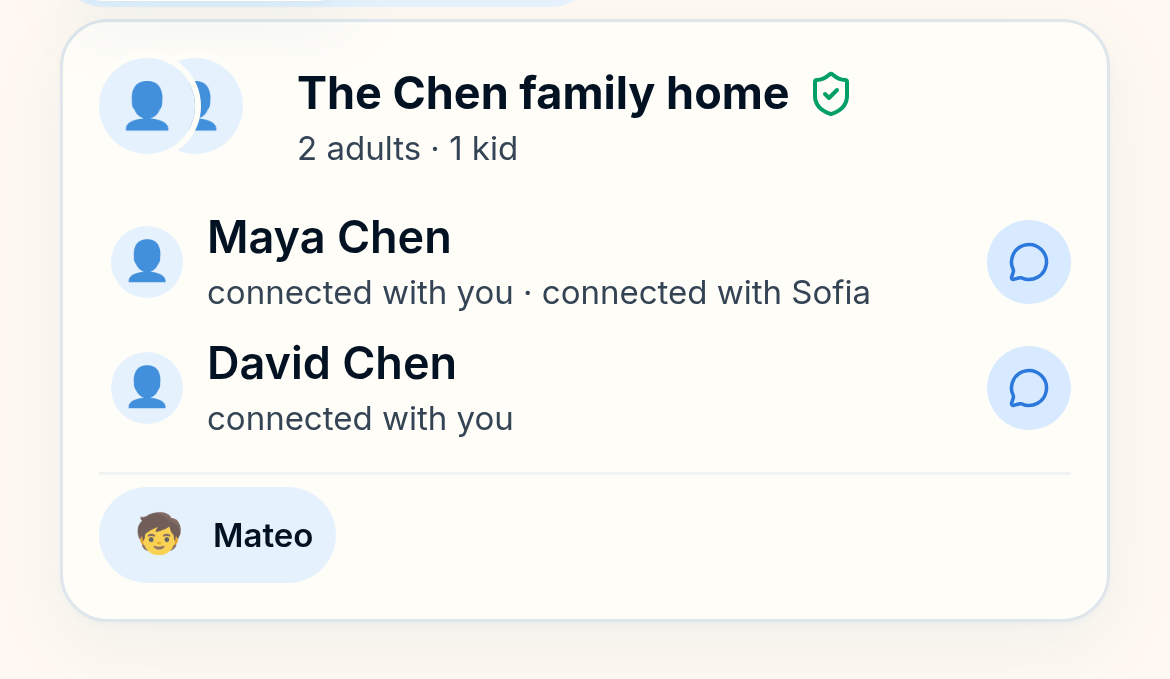
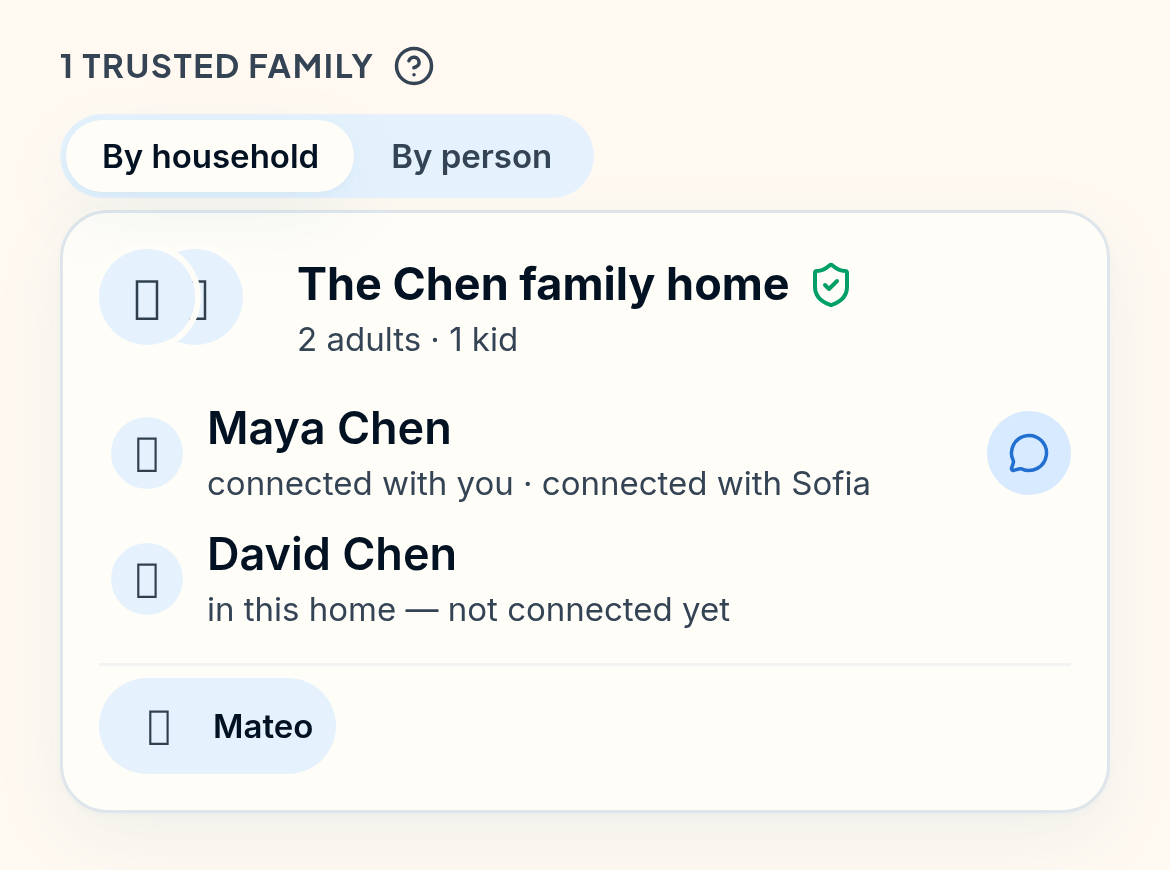
Useful before anyone else joins. You choose who belongs here.
The week, handled
An afternoon was free. So was another family. Nobody found out in time.
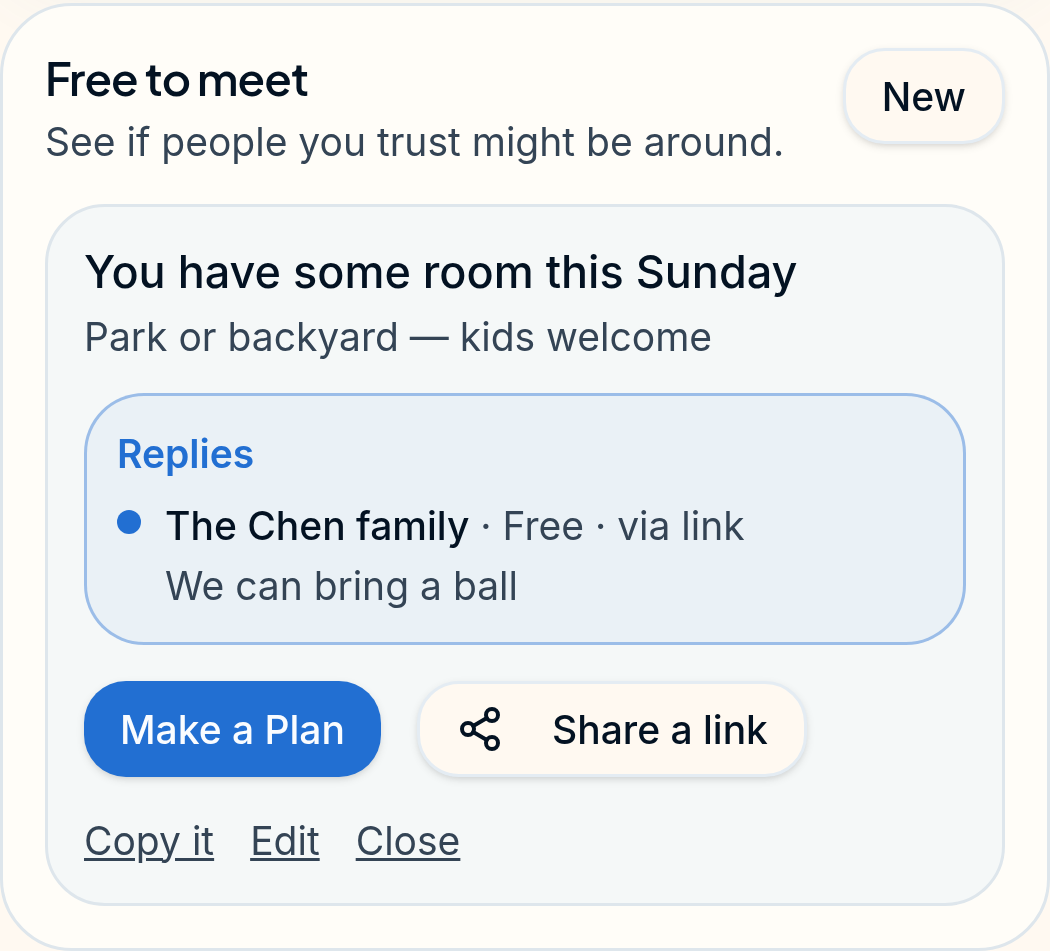
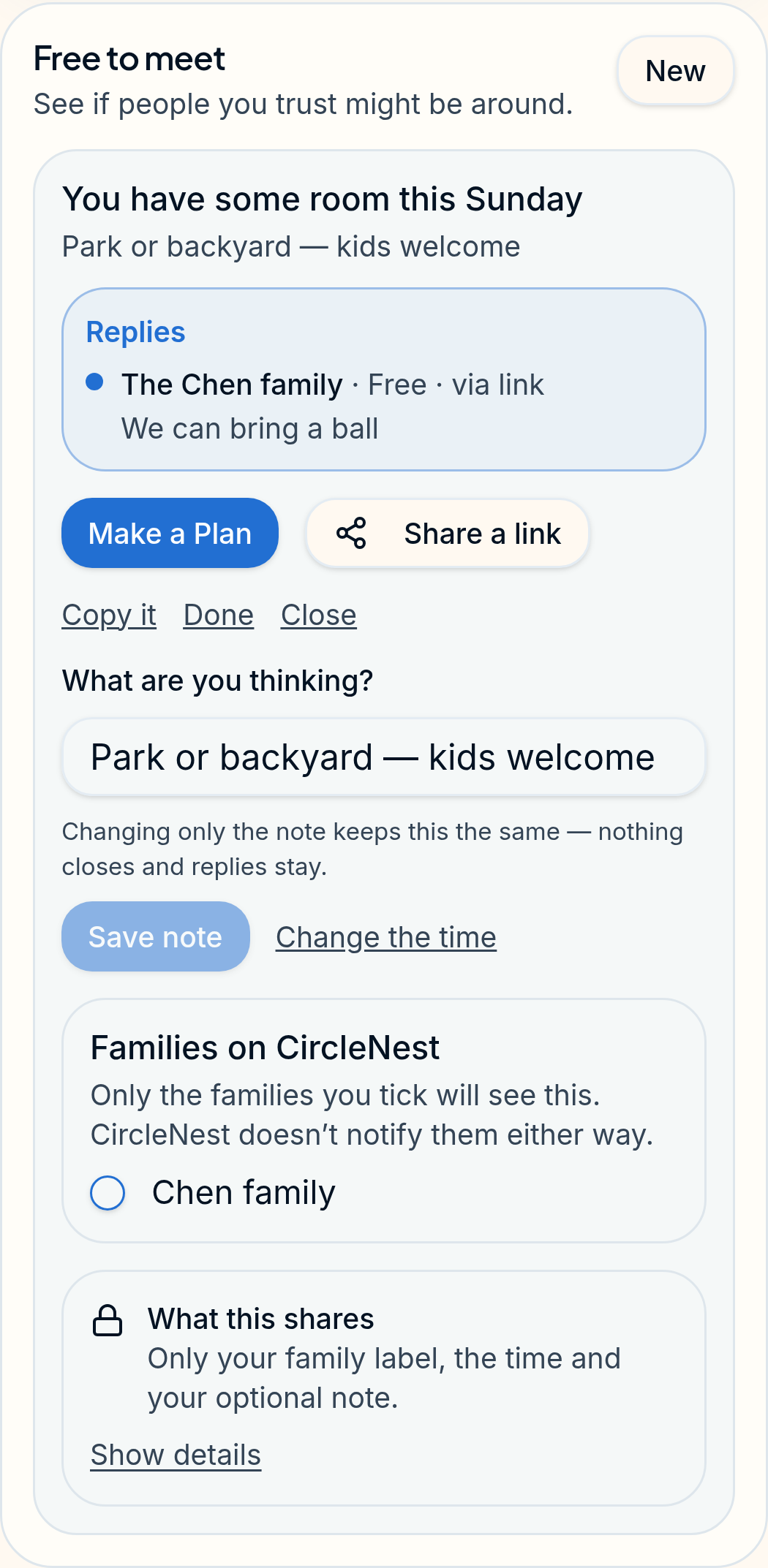
The time was there. So were the people. Free to meet lets you ask who's around — or tell the families you chose you have some room, while there's still time to use it.
A little time opens up.
Share that Sunday afternoon is free — or ask who's around.
People you know might be free too.
The households you chose can answer, even without an account.
It becomes a plan before the window passes.
Time, place, who's driving, who's bringing what — settled once.
Around the plan
Then the practical part.
A plan is rarely just a time and a place. Someone drives, someone brings the snacks, someone at home does the jobs, and someone has to say yes. CircleNest holds that work where the plan lives.
- Who's driving
Rides sorted on the plan itself — offered, claimed, and visible to the parents it affects.
- Jobs and lists at home
The run to the shop, the thing that needs doing, the list one parent was carrying alone. Shared inside the household.
- Who's bringing what
The small volunteering that makes a Saturday work: bring the fruit, bring the chairs, take one of the two slots left.
- Asking and approving
A child asks; a parent approves or declines. The answer is recorded where the plan lives instead of in someone's memory.
Not a rideshare, a volunteering board or a project-management tool — just the coordination families already do.
Saturday, soccer at ten. By Friday night everyone already knew their part.
Someone's driving, the snacks are handled, and nobody had to run the group chat.
Conversation
Structure the coordination. Protect the conversation.
CircleNest reduces coordination noise — not human connection. When the logistics have somewhere to live, the talking doesn't have to carry them.
- Your household has its own thread. The everyday back-and-forth between the adults at home.
- A circle can talk as a circle. Without a group chat that includes half the school.
- Every plan owns its conversation. Questions about Sunday stay attached to Sunday, with the people who were part of it.
Share and invite
Being told about something isn't the same as being part of it.
Most apps have one verb. Family life has two.
Grandma should know about the recital. She doesn't need to answer anything. Sharing informs; it never makes someone a participant.
The family who might drive needs to be able to answer, bring something, and be counted. Inviting makes someone a participant.
How it reaches them — link, message or email — is just delivery. The people you invite can answer without joining CircleNest; their reply stays connected to the plan, and the link shows the current details whenever they reopen it.
What remains
Something from an ordinary afternoon becomes part of your family memory.
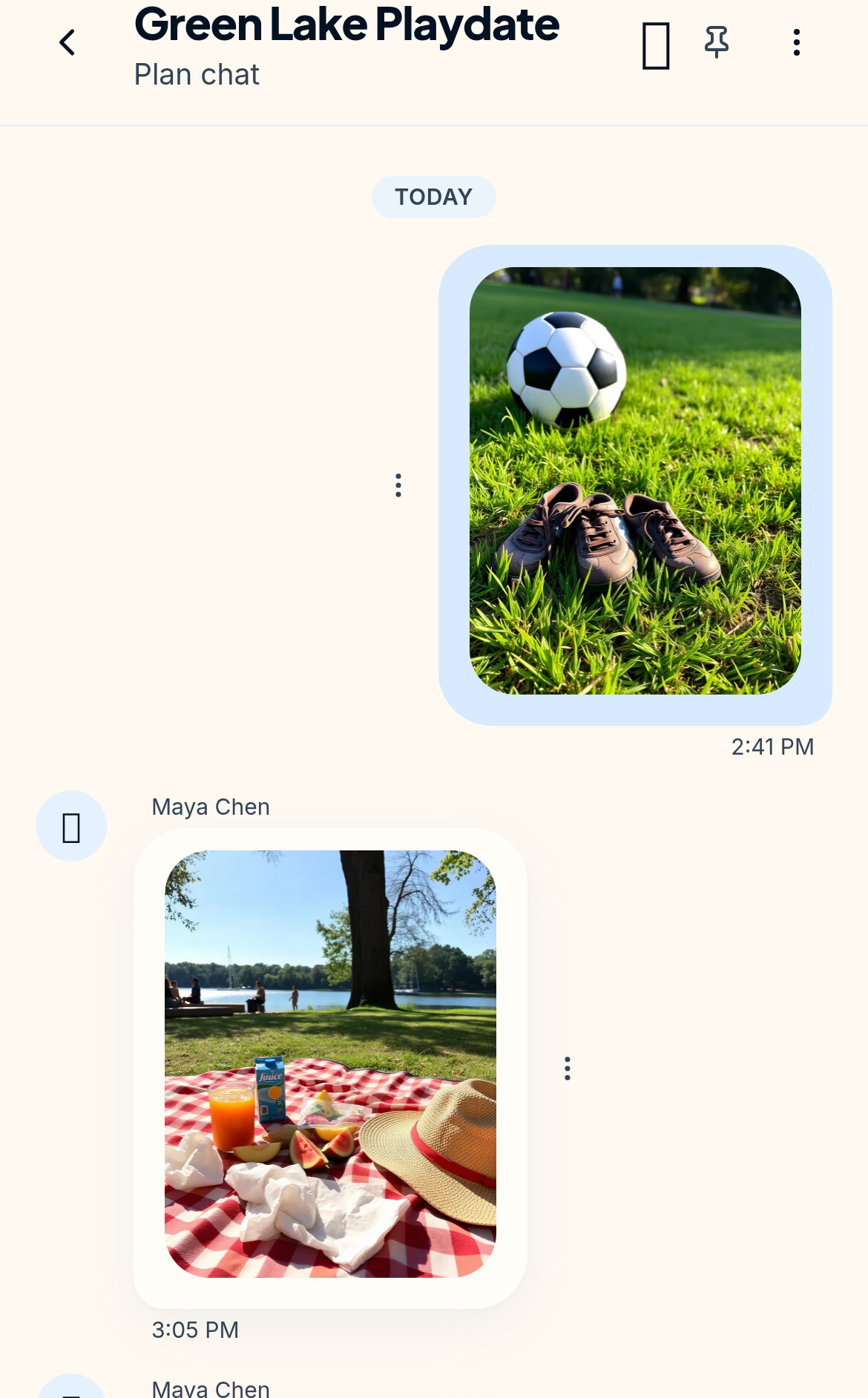
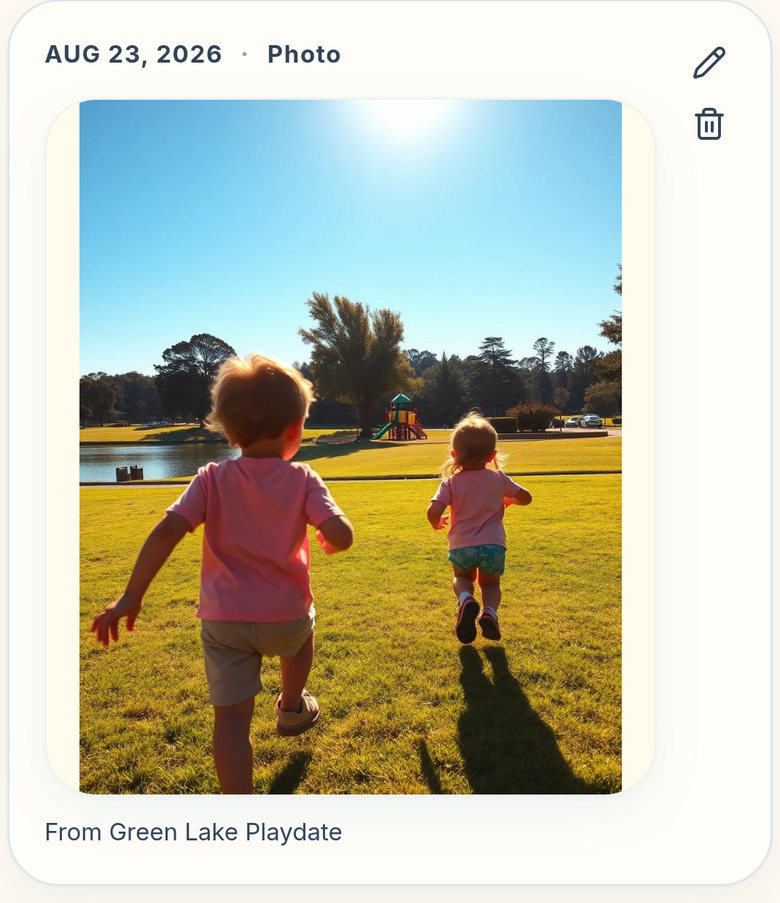
Sometimes the photo you want isn't on your phone. The people who were there can add theirs to the plan, so the afternoon doesn't end across five different camera rolls. Keep the ones that become worth remembering: a kept photo leaves the chat for your family timeline — dated, still connected to the afternoon it came from, and yours to export or delete.
Kids
Kids take part, at their size.
A child can see their own week, ask for a plan, say they've arrived, make something and keep their own memories. Real participation in family life — not a watched version of it — with parents holding the boundaries.
How we handle kids' privacyDesigned differently on purpose
- No advertising and no data selling.
Your family is not the product, and never becomes an audience.
- No public feed.
No follower counts, and no ranking of other families for you.
- No score of any kind.
Nobody is shamed for declining, and silence is an acceptable answer.
- No live map or location history.
No trail of where your family has been is kept, by design.